by Sumanth Inukonda, Ph.D., Associate Professor of Communication Studies, LaGuardia Community College, CUNY
ABOUT THE AUTHOR
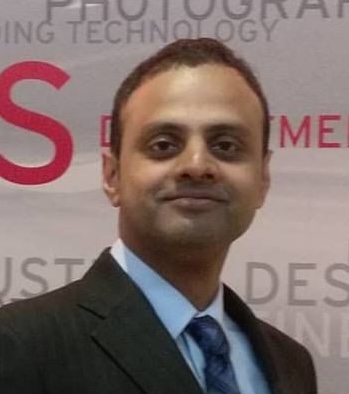
Dr. Sumanth Inukonda
Sumanth Inukonda is Associate Professor of Communication at LaGuardia Community College, City University of New York (CUNY). His book, Media, Nationalism, and Globalization: The Telangana Movement and Indian Politics (2020), explores the meaning of nationalism in a globalized, postcolonial context, providing an in-depth understanding of the relationship between marginalized groups, media, and politics through a focused study of the Telangana movement in India. His latest co-edited book Propaganda, Communication and Empire: Western Intervention in Afghanistan (2025) interrogates the mediatized politics of western intervention in Afghanistan, to gain a deeper understanding of the occupation within the broader transition toward a multipolar global order. He has published research in journals such as Global Media and Communication and the International Journal of Communication.
For many Indian students, the American dream has dimmed dramatically. Once seen as a beacon of opportunity, the United States is now a source of uncertainty. Shifting immigration policies – particularly under the Trump administration – have made it harder for international students to study, work, and thrive. In Fall 2025, Indian student enrollment in the US universities fell by a staggering 45%1. The student visa rejections for Indians have climbed to over 60%2.
At LaGuardia Community College, where I teach, international students must maintain full-time enrollment. A prolonged absence can lead to withdrawal from classes – and worse, visa revocation. Many students, especially those from South Asia, are struggling to find paid work after graduation, a key step in repaying student loans and securing a future in the U.S. Indian students complain of encountering greater difficulty in finding jobs, one student, Abhishek explained his circumstances: “I am doing an unpaid internship, as I could not find paid work, my OPT period is running out, I worry I would go back to India with a heavy loan.”
A Nation’s Aspirations Abroad
In India, where I come from, the per capita income hovers around $3,000 per year. Higher education abroad is often seen as a ticket to upward mobility. A robust ecosystem has emerged to support this dream – from test prep centers to visa consultants, and even temples like Chilkur Balaji near Hyderabad, where hopefuls pray for visa approvals.
For many in the urban middle class, the American dream has come to represent their aspirations. Successful Indian expats – like Satya Nadella, Sundar Pichai, Ajay Banga, and Gita Gopinath – are celebrated in Indian media as symbols of what’s possible in the US. But that dream is becoming harder to reach.
A Sharp Decline in Enrollment
In the 2023–24 academic year, India surpassed China as the top source of international students in the U.S., with over 330,000 enrolled3. But by March 2024, the number of incoming Indian students had dropped by 28% to 255,0004. This decline is part of a broader trend: international student enrollment in the U.S. fell by 11% overall5 that year. In July 2025, the number of Indian student arrivals dropped by 46%6 due to increased visa scrutiny and growing uncertainty regarding OPT and H1B programs for post-study work.
The economic impact is significant. Indian students contributed over $11.8 billion7 to the U.S. economy in 2023–24. International students as a whole contributed $43 billion during the 2024-2025 academic year8, supporting jobs, local businesses, and innovation.
Visa delays, extensive background checks, and restrictions on duration have led to a sharp decline of nearly 50%9 in the number of Indian students attending US universities this year. First-year international students enrolled in graduate programs at the University at Buffalo recorded a sharp 58% decline10. A presidential memo making access to federal funds conditional on universities limiting foreign students to under 15% of the total, with no more than 5% from any single country, could further impact the numbers.
On May 6th, 2026, the Department of Homeland Security made a major move to eliminate the duration of status for student and visitor visas and replace it with a fixed 4-year term11. If approved, this would reshape how students and postdoctoral researchers are admitted into the US starting Fall 2026.
New H-1B Visa Barriers
In a stunning escalation, the Trump administration recently announced that new H-1B visa applications would cost $100,000 – a dramatic increase from the previous $2,000 to $5,000 employers paid to sponsor workers. This change has sent shockwaves through the Indian student community, many of whom rely on the H-1B pathway to transition from education to employment.
A new bill introduced12 by Rep. Eli Crane in the US House of Representatives on April 22nd, 2026, proposes a three-year hiring freeze on fresh H1-Bs, abolishes Optional Practical Training (OPT), and sets a minimum salary of $200,000. The bill also proposes reducing the number of fresh visas issued from 65,000 to 25,000.
Post-study internships through OPT have been a stepping stone to employment under the H-1 B program. Without assistantships or work authorization, students face steep costs – often exceeding $50,000 per year. In high-cost cities like New York, some resort to unauthorized work, risking visa revocation. Alarmingly, more than 1,800 students have had their visas revoked without due process13. Some have chosen to self-deport.
In May 2026, the US administration also proposed increasing wages paid to immigrant workers on H-1B visas by over 30%14, a move it believes will help prevent foreigners from undercutting the salaries of American workers.
These changes appear to disproportionately affect Indian students. Over 70% of H-1B visas15 go to Indians. Data released in April 2025 by the American Immigration Lawyers Association estimates that 50% of those affected by visa revocations16 are from India, compared to 14% from China.
A Broader Global Shift
While U.S. policy plays a major role, the decline in Indian student migration is part of a global trend. In 2024, the number of Indian students going abroad fell sharply17, driven by tighter visa rules and diplomatic tensions. The U.S. experienced a 13% decline, the UK a 28% decline, and Canada, which saw heightened diplomatic tensions with India, a staggering 41% decline. This year’s numbers for the US, once available, will show a greater decline over last year.
Europe and New Zealand are emerging as alternatives, but their languages and market sizes limit their appeal. The traditional destinations – the U.S., UK, Canada, and Australia – still account for over two-thirds of Indian students abroad.
The Reshaping of a Dream
Vishal, an engineering graduate from the southern state of Telangana, has deferred his plans to go to the United States for a master's degree. “I will work in India for three years and then try to go to the U.S., depending on how the situation shapes up.” He believes three years of experience will help his employability in the U.S., “if I have to take a loan and am eventually unable to find work in US it will be difficult to repay the loan.” Given the high cost of education, the availability of OPT and H-1 B visas influences decisions about education.
Restrictive policies, economic pressures, and growing uncertainty are reshaping migration patterns. If the U.S. wants to remain a global leader in education and innovation, it must recognize the immense value international students bring – and ensure that the dream they chase remains within reach. Universities need to think outside the box to enable a greater exchange of knowledge sharing across borders.
Some Western universities have campuses abroad in the Middle East, and several others are opening operations in India, with some starting operations in Fall 2026 to tap into new markets.
1. ET Online. (2026, February 27). Indian student enrollments in US universities drop 45% due to visa uncertainty, rising costs. The Economic Times. https://economictimes.indiatimes.com/nri/study/indian-students-record-45-drop-in-us-university-enrolments-due-to-visa-uncertainty-rising-costs/articleshow/128838546.cms?from=mdr
2. Indian Tech & Infra [@IndianTechGuide]. (2025). The rejection rates for Indians applying for US F-1 student visas have climbed to 61% in 2025 [Image attached] [Post]. X. https://x.com/IndianTechGuide/status/2056604523922088324?shem=dsdf,sharefoc,agadiscoversdl,,sh/x/discover/m1/4
3. Gupta, A. (2025, June 2). Inside the US dream: What Indian students are studying and what attracts them. News18.com. https://www.news18.com/education-career/inside-the-us-dream-what-indian-students-are-studying-and-why-it-appeals-9363815.html
4. Dhawan, S. (2025, April 18). Studying in America: Indian student enrollment in the US drops 28% in a year. Financial Express. https://www.financialexpress.com/business/investing-abroad-indian-students-turning-away-from-us-as-enrollment-numbers-plunge-28-3813817/
5. SEVIS data highlights decline in international enrollments in the US 2024/2025. (2025, May 12). CPT Hunt. https://cpthunt.org/sevis-data-highlights-decline-in-international-student-enrollments-in-the-u-s-for-2024-25/
6. Jain, A. (2025, August 21). Why Indian student arrivals to the US dropped 46% in July. Gateway International. https://gateway-international.in/indian-student-arrivals-to-the-us/
7. Gohain, M. A. (2024, November 19). India top source of international students in US after 15-year gap. The Times of India. https://timesofindia.indiatimes.com/india/india-top-source-of-international-students-in-us-after-15-year-gap/articleshow/115431709.cms
8. NAFSA international student economic value tool. (n.d.). NAFSA.org. https://www.nafsa.org/policy-and-advocacy/policy-resources/nafsa-international-student-economic-value-tool-v2
9. Kumar, G. (2025, October 3). Indian students skipping US? Arrivals down 50% in July-August. India Today. https://www.indiatoday.in/world/us-news/story/indian-student-arrivals-us-universities-plunge-nearly-50-per-cent-july-august-optional-practical-training-programme-immigration-2797236-2025-10-03
10. Tewari, T. (2025, October 3). US universities face steep enrollment decline as Trump’s visa policies drive international students away. The Times of India. https://timesofindia.indiatimes.com/education/news/us-universities-on-the-brink-as-trump-era-visa-policies-trigger-historic-international-student-collapse/articleshow/124280721.cms
11. ET Online. (2026, May 8). US weighs major student visa change as “duration of status” rule reaches final review. The Economic Times. https://economictimes.indiatimes.com/nri/study/us-weighs-major-student-visa-change-as-duration-of-status-rule-reaches-final-review/articleshow/130882445.cms?from=mdr
12. Kateel, A. (2026, April 27). Strongest bill against H-1B in US Congress; 3-year freeze on visa proposed. India Today. https://www.indiatoday.in/world/us-news/story/h1b-visa-news-republican-lawmakers-trump-administration-bill-propose-freeze-visa-three-years-us-congress-2902269-2026-04-27
13. International student visas revoked. (2025, April 27). Inside Higher Ed. https://www.insidehighered.com/news/global/international-students-us/2025/04/07/where-students-have-had-their-visas-revoked
14. News On Air. (2026, May 10). US proposes 30% hike in minimum wages under H1B visa program. Akashvani. https://www.newsonair.gov.in/us-proposes-30-hike-in-minimum-wages-under-h1b-visa-programme/
15. Smith, D. (2025, September 22). Over 70% of H-1B visa holders are Indian citizens. Its government says Trump jacking the fee to $100,000 is “likely to have humanitarian consequences.” Fortune. https://fortune.com/2025/09/22/india-government-responds-trump-h1b-visa-fees-100k-increase/
16. HT News Desk. (2025, April 19). 50% Indian students among revoked US visa cases, claims lawyers’ body. Hindustan Times. https://www.hindustantimes.com/world-news/50-indian-students-among-revoked-us-visa-cases-claims-lawyers-body-101745026340652.html#google_vignette
17. Business Today Desk. (2025, July 26). India sees sharp fall in students heading to US, UK, Canada; Russia and Bangladesh gain. Business Today. https://www.businesstoday.in/nri/study/story/india-sees-sharp-fall-in-students-heading-to-us-uk-canada-russia-and-bangladesh-gain-486434-2025-07-26